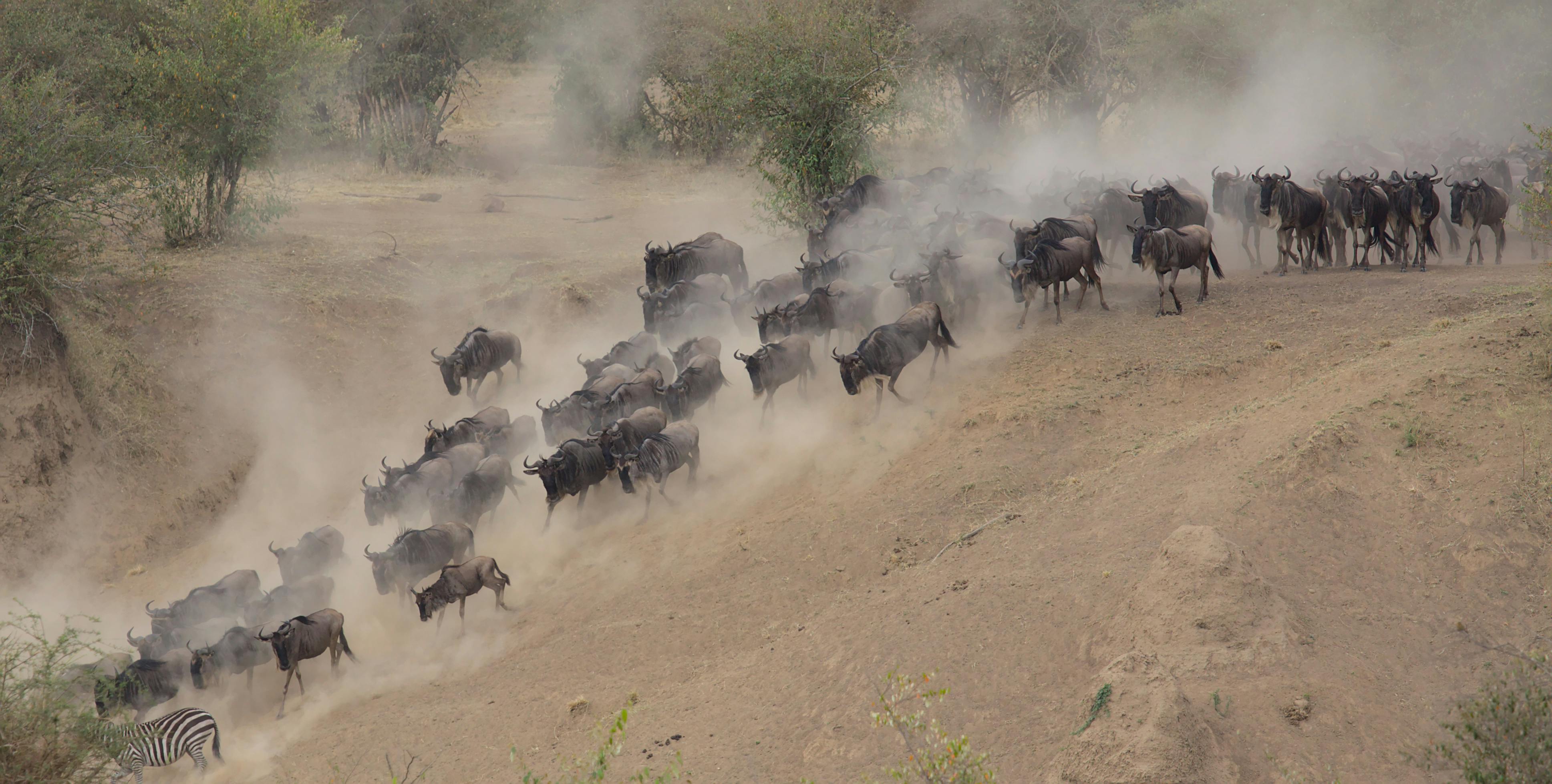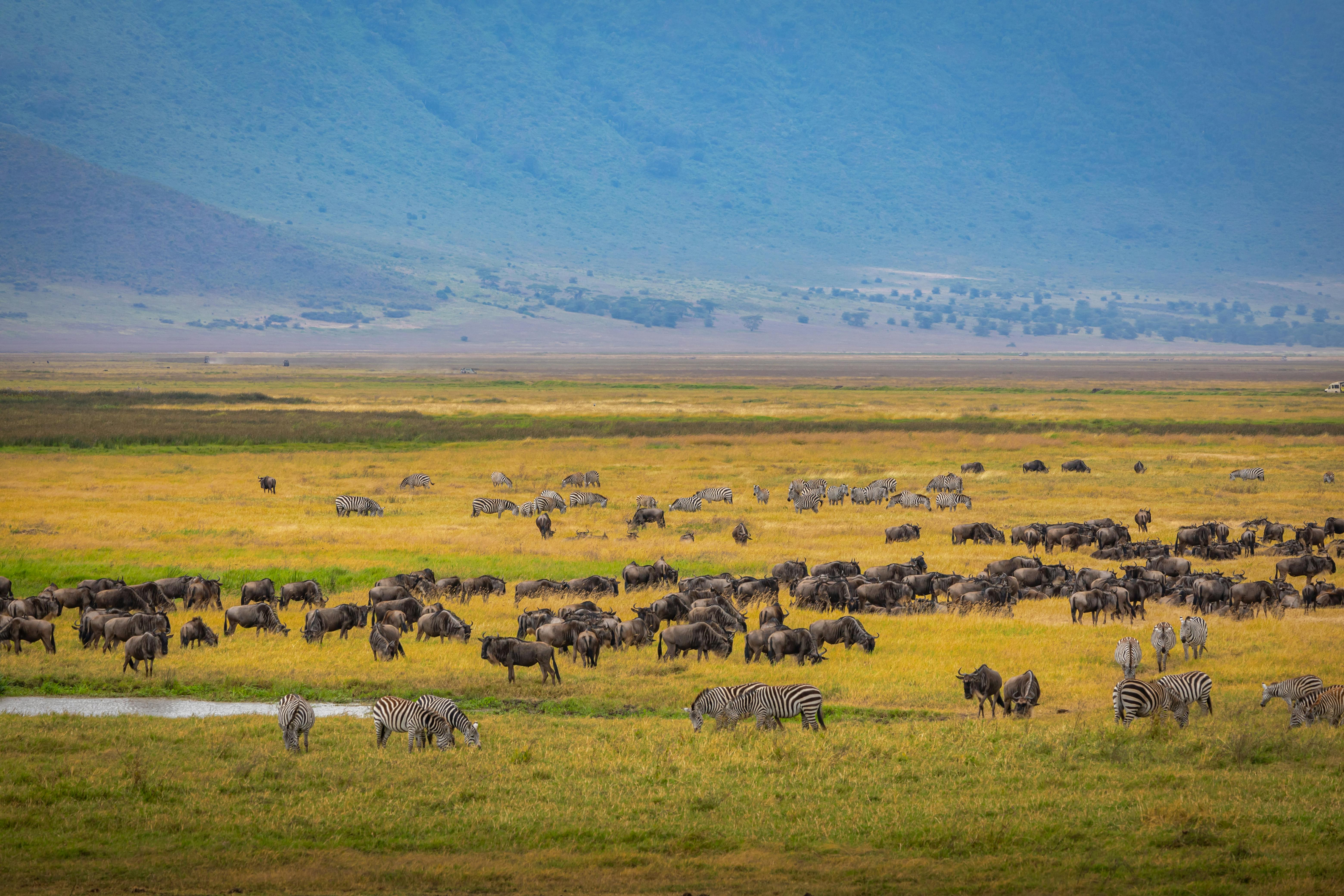
The air thrums with anticipation. A distant, low groan grows into a thunderous roar. Then, they appear, not a few herds, but nearly two million wildebeest, zebra, and gazelles, stretching from one horizon to the next, a brown, black, and white river pouring across the plains. This is the Great Migration, the most monumental movement of animals on the planet, and witnessing it in person is nothing short of life-changing.
For any genuine adventurer, seeing this epic, cyclical journey of life and death is the ultimate safari goal. It’s an immersion into pure, untamed nature, where survival dictates every single step taken. While the images of crocodiles waiting for the dramatic river crossings are iconic, the migration is a year-round phenomenon, an endless, circular quest for fresh grazing and water that dictates the rhythm of the entire Serengeti-Mara ecosystem.
However, planning a trip to witness this moving spectacle requires precision. Unlike a regular safari, the herds are constantly on the move, meaning the success of your adventure hinges entirely on accurate timing and location. This guide is designed to cut through the confusion and help you pinpoint the action. We will reveal the best time to see the Great Migration by breaking down the movement month-by-month, ensuring you’re in the right place at the right time, whether you’re tracking the newborn calves in the south or the massive columns heading north.
We’ll guide you on the different types of Great Migration packages available, detailing everything from luxury tented camps that move with the herds to fixed lodges that offer prime viewing during specific periods. Whether you’re interested in the dramatic calving season or chasing the river crossings, we’ll ensure your Great Migration safari puts you directly into the heart of the world’s greatest show, with a focus on where and when the magic happens during the crucial Serengeti migration.
The Annual Cycle: Finding the Best Time to See the Great Migration
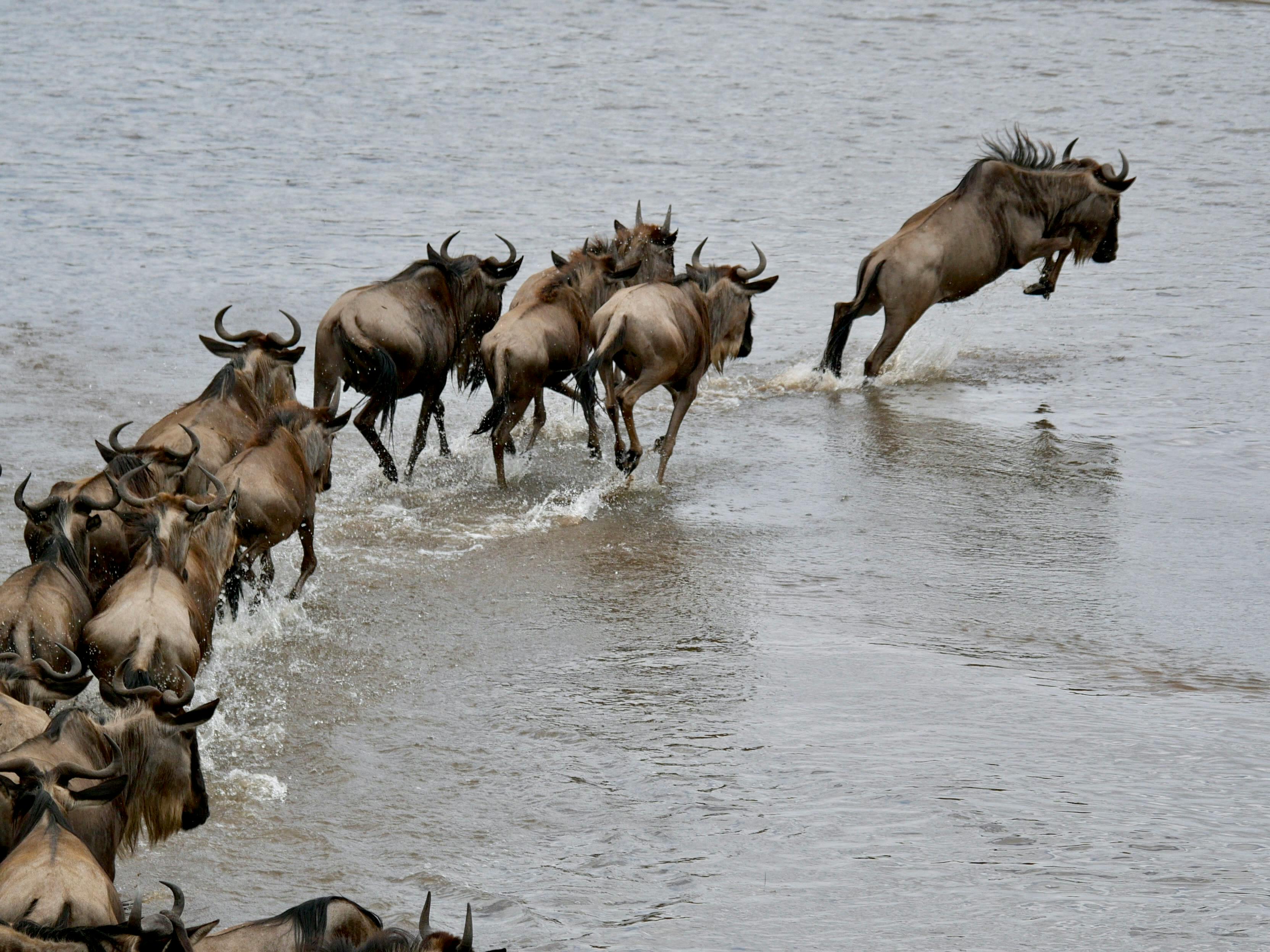
Pinpointing the best time to see the Great Migration is the single most important decision you will make when planning your trip. The common misconception is that the migration is a single event, but it is, in fact, an unending, clockwork cycle driven entirely by the search for water and fresh grazing. This means the enormous herds are constantly moving, scattering, and regrouping across a vast area that encompasses Tanzania’s Serengeti and Kenya’s Maasai Mara. To experience the true scale of the spectacle, you need to align your travel dates with the herds’ location. The entire journey centres on the Serengeti migration, as the wildebeest spend roughly ten months of the year on the Tanzanian plains. The migration can be segmented into three main phases, and choosing your dates depends on which dramatic moment you want to witness: The Calving Season (Jan–Mar): Located in the southern Serengeti and Ngorongoro Conservation Area, this is when over 400,000 calves are born in a matter of weeks. It offers guaranteed concentrations of animals and intense predator action. The River Crossings (Jul–Oct): The iconic, high-drama period where the herds attempt the perilous crossings of the Grumeti and Mara Rivers, moving between the northern Serengeti and the Maasai Mara. This is peak season and requires booking the right Great Migration safari well in advance. The Trekking/Rutting Season (Apr–Jun, Nov–Dec): Periods of relentless movement as the herds march between regions. While less predictable, the sight of the mile-long columns marching across the plains offers its own spectacular views. Because different luxury camps and lodges follow the movement, your chosen dates will determine where you can stay and which activities are possible.The Serengeti Migration Calendar: What to Expect Month-by-Month
The core of the incredible animal spectacle occurs in Tanzania, meaning that understanding the Serengeti migration month-by-month is essential for timing your visit perfectly. This detailed calendar is your key to securing the best time to see the Great Migration phenomenon you desire, ensuring your Great Migration safari aligns with the action. The annual cycle begins in the deep south, where, from January to March, the herds are highly concentrated on the short-grass plains of the Southern Serengeti and Ndutu. This is the pivotal calving season, a time of immense energy when over 400,000 calves are born within a matter of weeks. It offers some of the most intense predator action available, as lions, cheetahs, and hyenas capitalise on the abundant, vulnerable prey. If density and drama are your priority, this is a prime window often featured in specialised Great Migration packages. By April and May, the southern plains are depleted, and the great trek begins. Long, winding columns of wildebeest start their determined movement north-west, flowing through the Central Serengeti and into the Western Corridor. This period, often falling within the long rainy season, is excellent for those seeking fewer crowds, as the herds travel quickly, and the dramatic rutting (mating) season is often in full swing. The high drama arrives between June and October. First, the herds face the Grumeti River (Jun–Jul), and then the iconic Mara River (Aug–Oct) in the Northern Serengeti. The risk to the animals is enormous, making these high-stakes crossings the most popular focus for many travellers. If your goal is to witness a crossing, a Northern Serengeti camp during this peak season is necessary to maximise your chances. Finally, as the short rains commence in November and December, the cycle completes itself. The herds trek back down towards the fertile south, often passing through the remote Eastern Serengeti and Lobo area, seeking the fresh green shoots that signal the start of the next calving season, ready for the circle of life to begin anew.Planning Your Great Migration Safari: Mobile Camps vs. Fixed Lodges
The next most important decision is your accommodation. This choice will fundamentally define your Great Migration safari experience, largely boiling down to a decision between mobile tented camps and permanent lodges. Mobile tented camps are the prime choice for the committed migration enthusiast. These camps relocate three or four times per year to ensure they are always positioned for the Serengeti migration action. Their greatest advantage is unparalleled proximity: you often wake up to the sounds of the herds grazing just outside your canvas tent. While ‘tented,’ modern mobile camps are luxurious, offering king-sized beds, en-suite plumbed showers, and gourmet dining, blending authenticity with high-end comfort. They provide an intimate, ‘bush-first’ experience, but are generally smaller and require early booking, as they are a central component of premium Great Migration packages. Lodges, conversely, offer stability and consistent luxury. Fixed in key, often scenic, locations, they boast amenities like swimming pools, spas, and extensive communal areas that mobile camps cannot. These are ideal if you prefer a solid structure, air-conditioning, or are travelling with young children. However, a permanent lodge’s fixed location means you may need to spend more time driving to reach the heart of the herds if they have moved on that particular week. Many comprehensive Great Migration packages even offer a combination of both to maximise both comfort and sighting opportunities.Booking Your Trip: Curated Great Migration Packages for Every Budget
Securing your place for the world’s greatest wildlife show requires advance planning, and the cost of your Great Migration safari is primarily determined by the package level you choose. Fortunately, the range of available Great Migration packages means there is a suitable option for nearly every budget. At the premium end, luxury safaris offer an all-inclusive experience. These packages typically include flying between camps to maximise game viewing time, staying in the most exclusive, high-end mobile camps, and often feature private vehicles and expert, specialist guides. This level ensures you are perfectly placed for the Serengeti migration, such as a Mara River crossing, without sacrificing comfort. For the mid-range traveller, classic safaris offer fantastic value. These itineraries often blend fixed lodges with comfortable, semi-permanent tented camps and utilise road transfers between the main areas. You will still enjoy exceptional sightings and excellent guiding, but with shared vehicles and fewer ultra-luxury amenities. This is a popular choice for families and those seeking a balance of quality and affordability. Budget safaris are the most economical way to witness the event. These are typically group camping safaris, utilising public or basic campsites and simple dome tents. While you will be closer to the ground, you sacrifice comfort and flexibility. The trade-off is often a greater sense of adventure and the raw, immersive experience of being out on the plains with the migrating herds. Regardless of your budget, always book at least nine to twelve months ahead, especially for peak crossing and calving seasons.Where can I get my hands on Great Migration packages?
Having explored the rhythm of the Great Migration and the range of packages available, your next step is to partner with a trusted operator who can deliver the trip of a lifetime. Look no further than Travel Republic Africa, a specialist in crafting immersive and expertly guided East African experiences. As an experienced African tour company, we meticulously curate itineraries to ensure you are in the perfect location at the perfect time. Our safari options are designed to cover the entire Great Migration cycle, offering both premium and mid-range accommodation, from luxury lodges to well-appointed tented camps. Booking your adventure is straightforward. You can easily view our dedicated Great Migration packages, which include detailed itineraries for different times of the year. Alternatively, our team of experts can tailor-make a safari that aligns perfectly with your budget, desired duration, and specific interests. Don’t leave this once-in-a-lifetime journey to chance! Get in touch with Travel Republic Africa today and start planning your front-row seat to the world’s greatest natural spectacle.
Post Views: 86